In short
- Custom means the words and the structure are written for your business, not that every button is invented from scratch.
- That's why my websites start at £500 and none of them is a template.
- I reuse the engine underneath (hosting, forms, security, speed), never the words or the page plan.
- A template is honestly the right call if you want to build it yourself or you're still testing an idea.
Search "custom website vs template" and most UK articles tell you the same thing: a bespoke site costs thousands, often £5,000 and up. That's fair if custom means a design team inventing everything from a blank page. It isn't what I mean. My websites start at £500, and none of them is a template.
What "custom" actually means
For a small business, custom means the site is written for you. The words, the order of the pages, what the homepage says first, and the one thing it asks a visitor to do. It doesn't mean a button shape nobody has seen before. Your customers won't notice the button. They will notice if the site answers their question, in their words, about your business.
Why a template can't say your name properly
A template decides the structure before it knows anything about you. Big photo, three boxes, a testimonial, a contact form. You fill in the blanks, and the blanks were designed for any business at all.
That works until your business has something particular to say. A gelato maker with 89 flavours needs chefs to find the right one fast. A sign company needs to help people who don't know the difference between a fascia and a hoarding panel. No template ships with either of those, because they only make sense for one business.
Where the £500 goes
The money goes on thinking and writing, not on reinventing things that already work. The Pup is £500 one-off: one page, mobile-perfect, with the words written for you, a contact form and map, a tidy-up of your Google Business Profile, and live in a week. The Good Boy is £950: everything in the Pup, for up to five pages, with the copy and on-page SEO written for you. The Top Dog is £2,500 for up to twelve pages, full local SEO and a bespoke tool built for how your customers buy.
Prices exclude VAT; if your business isn't VAT registered, the price you see is what you pay. There's no minimum term on anything, and once the build is paid, the site is yours.
The bits I do reuse, and why that's fine
Under the bonnet, I reuse a lot. The hosting, the security, the contact forms, the speed work and the tools clients use to edit their own sites. Nobody's business gets better because I rebuilt a contact form from scratch yet again. Reusing it means it's already tested, already fast and already safe.
What I never reuse is what a customer reads and clicks. That's the part that has to be yours.
Two sites, two businesses
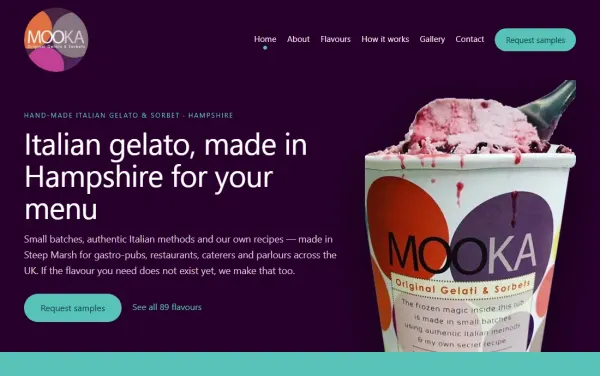
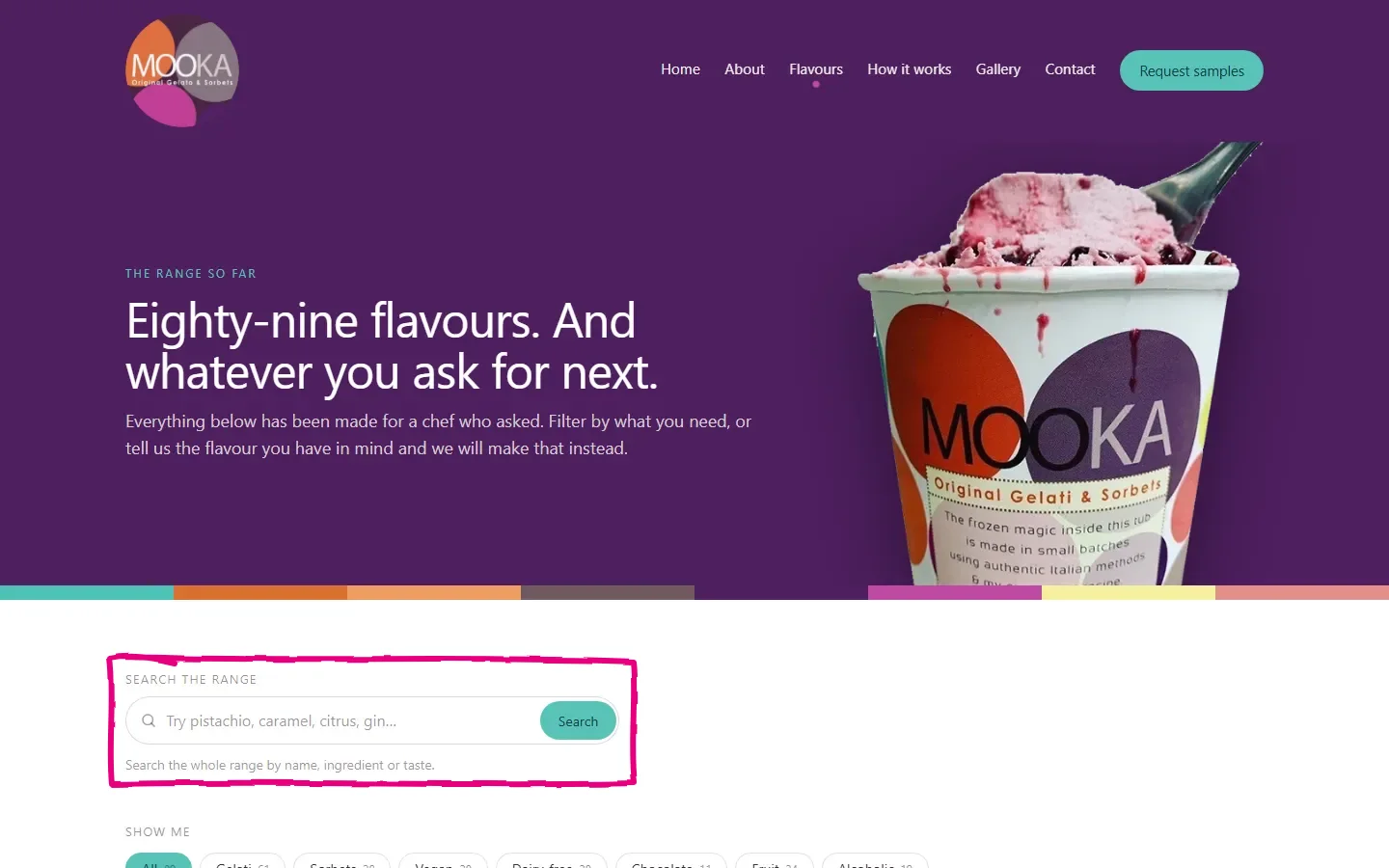
Mooka make gelato and sorbet in Steep Marsh, near Petersfield, for chefs, restaurants and caterers. Sixty-one gelati, twenty-eight sorbets. The site had one job: let a chef find the flavour for their dish in seconds, then ask for a sample. So Mooka's site is a flavour library, not a brochure. Every flavour has its own page, the filter works on any phone even with JavaScript switched off, and Mooka edit their own flavours.
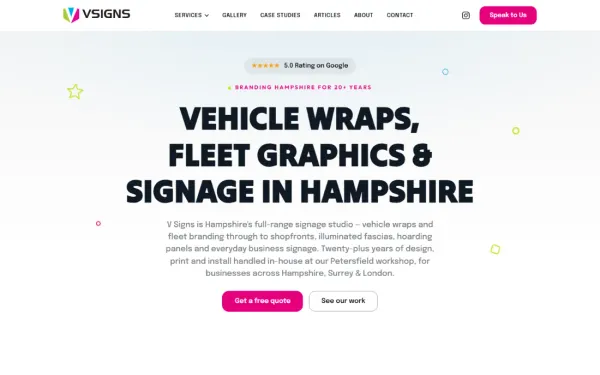
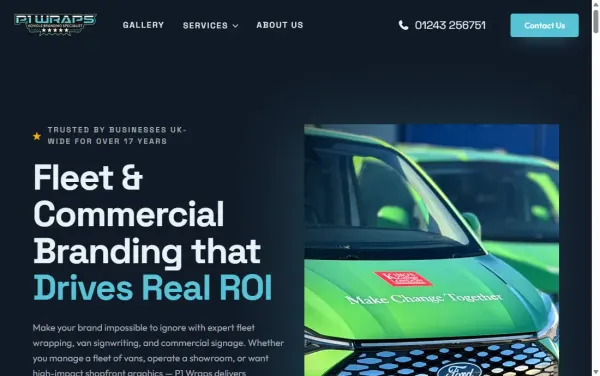
V Signs, a sign and wrap company near Petersfield, was a much bigger job: a six-month engagement covering the site, their Google profile, listings and social. Their site has a hub for each group of services and a page for each service, 21 in all. Because most people don't know the trade words, it has a Sign Finder: plain-English questions in, a recommended service out, and the whole answer trail lands with V Signs in the enquiry. In the gallery, every photo has an "I want something like this" link that carries the picture into the contact form.
Two very different sites. Neither could have started life as the other.
When a template is honestly the right call
Sometimes a template is the better choice, and I'll say so. If you enjoy building it yourself and have the evenings to do it, if you're still testing whether an idea will work, a builder will serve you well. (If what you need is an online shop, that isn't a reason to go it alone: I build those too, on WooCommerce, SureCart or Magento.) I've compared the options, with three years of costs, in Squarespace, Wix or a custom site.
If you'd rather have a site that's written for your business, see what's in each website pack, or tell me about your business and I'll tell you which one fits.
Questions people ask
Is a £500 website really custom?
Yes. The Pup is one page, but the words, the layout and what it asks visitors to do are written for your business. What I reuse is the engine underneath, which is exactly the part you'd never want me to reinvent.
Can I edit it myself afterwards?
Yes. On my platform you change your own text and photos by clicking them on the live page. Mooka, for example, look after their own flavour library. Bigger changes like new sections I can do for you, and they're included in the Care Plan.
What do you reuse between sites?
The hosting, the security, the contact forms, the speed work and the editing tools. I never reuse the words, the page structure or the photos, because those are what make the site yours.

Born in Petersfield in 1986, now based in Poland. Twenty-five years running real businesses, and now I build websites, local SEO and socials for Hampshire small businesses. Every price I quote is on one page.
Want a straight answer for your business?
Tell me what you do and where. I'll come back within one working day with a fixed price, not a range.