In short
- People are going numb to the AI look. 62% of UK consumers say they trust marketing less since brands started using AI.
- ChatGPT's adverts don't look bad. They look polished, and they look exactly like everyone else's.
- The giveaways are the things nobody checked, like a phone number you never gave it and reviews from people who don't exist.
- AI is a fine tool. What it can't do is know your business, so a person who does has to make the decisions.
Here's the short answer. A website or advert made from one AI prompt looks like the average of every other one, and people have learned to scroll straight past the average. In a 2026 survey, 64% of UK consumers said AI adverts are so obvious they are laughable. I use AI in my own work every day, so this isn't a post against it. It's about what's missing when AI is the only thing that touched the page.
Why are people scrolling past AI adverts?
There's an old name for this. Since the early days of the web, people have ignored anything that looks like an advert. The Nielsen Norman Group calls it banner blindness: people learn to skip what they think is an ad, whether it is one or not.
AI has given that habit a new trigger. In 2026 surveys of UK consumers:
- 62% said they trust marketing less since brands started using AI, and 72% are more likely to engage with content that feels human.
- 82% said they'd still rather see adverts made by people.
- 78% would trust a brand less if it used AI-generated people in its ads.
Nobody writes in to complain. They just scroll on, and the money you spent on the advert goes on people ignoring it.
Is it wrong to use AI for your website or adverts?
No. Designers and developers, me included, use AI to write code faster, try out layouts, tidy wording and resize photos. That's normal now.
The difference is who makes the decisions. An AI-assisted design is one where a person decides and AI speeds them up. A prompted design is one where the tool decides and nobody checks. The first can look like your business. The second looks like everybody's.
What ChatGPT made from one sentence
To show you the difference, I typed five short prompts into ChatGPT, the way a busy owner would, for a made-up firm called Brookvale Plumbing & Heating. I changed nothing it gave me. (The exact prompts are at the end of this post.)
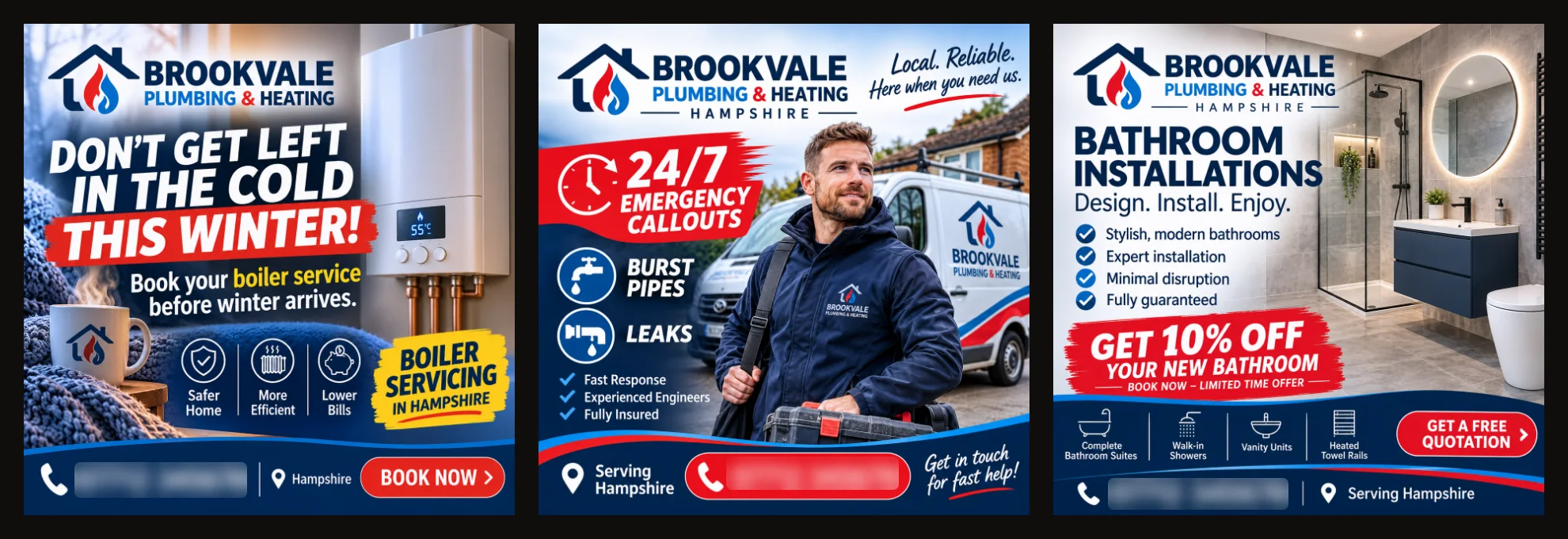
Here are the three adverts. They don't look terrible. They look professional. That's the problem. They look professional in exactly the same way for every plumber, roofer and electrician, and your customers have seen that look a thousand times this year.
The phone number is blurred on every example. ChatGPT made it up, and it could belong to a real person.
Every advert is the same advert
Put them side by side and it's one template with the words swapped. Navy, red and white. A red brush-stroke banner. A swoosh along the bottom. A row of line icons. A phone number in a red pill. Swap "plumbing" for "roofing" and nothing else would need to change.
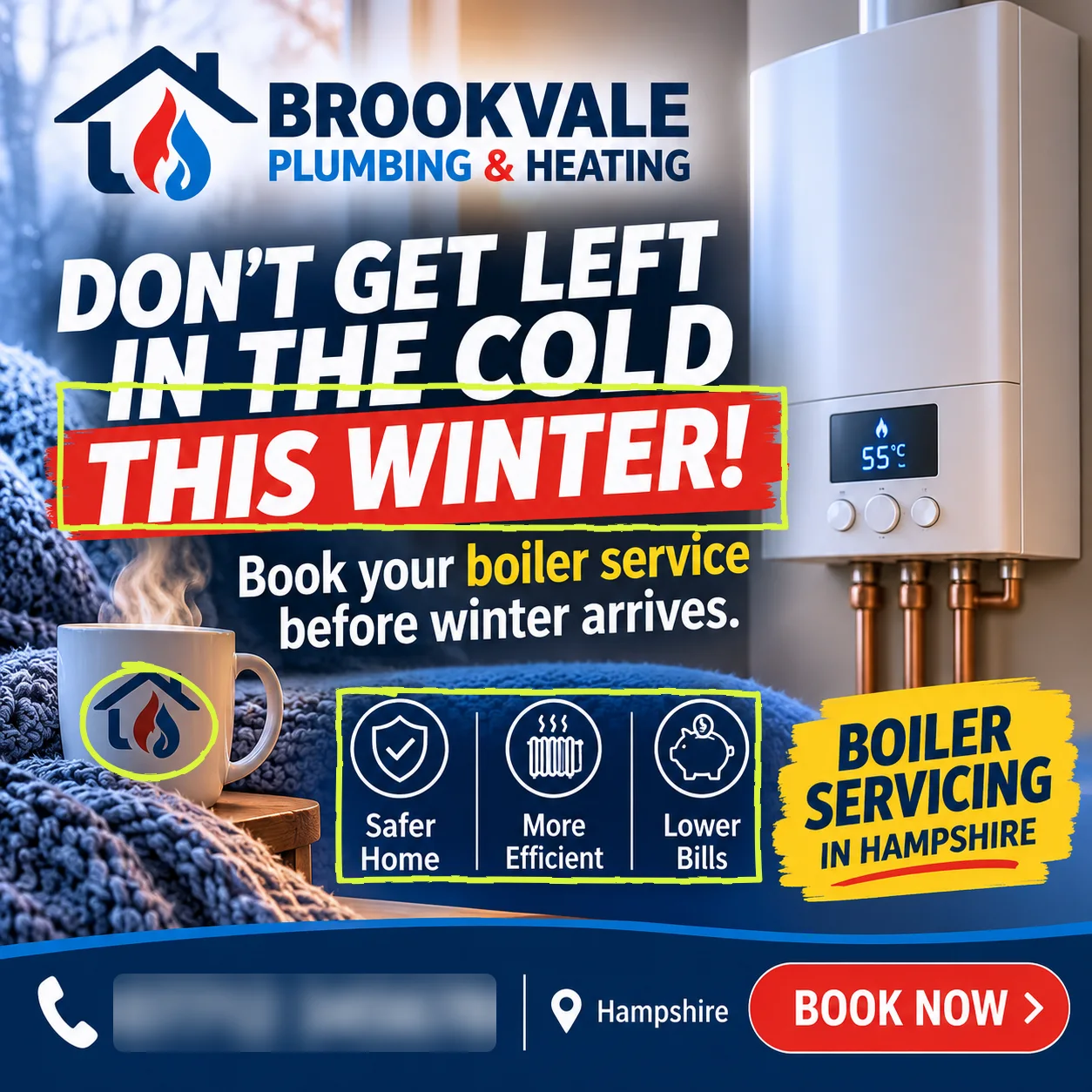
Then look closer:
- A phone number nobody gave it. The prompt never included one. ChatGPT invented a real-looking UK mobile and put it on everything. If a number's on your advert and you didn't type it, nobody checked.
- A logo on everything. It designed a logo nobody asked for, then printed it on a mug. Real businesses have one van with slightly wonky vinyl, not branded crockery.
Promises nobody made
"Fully guaranteed." "Fully insured." "Get 10% off your new bathroom." None of that was in the prompt. An advert offering a discount you never agreed to isn't a design problem, it's a customer on the phone asking for 10% off.
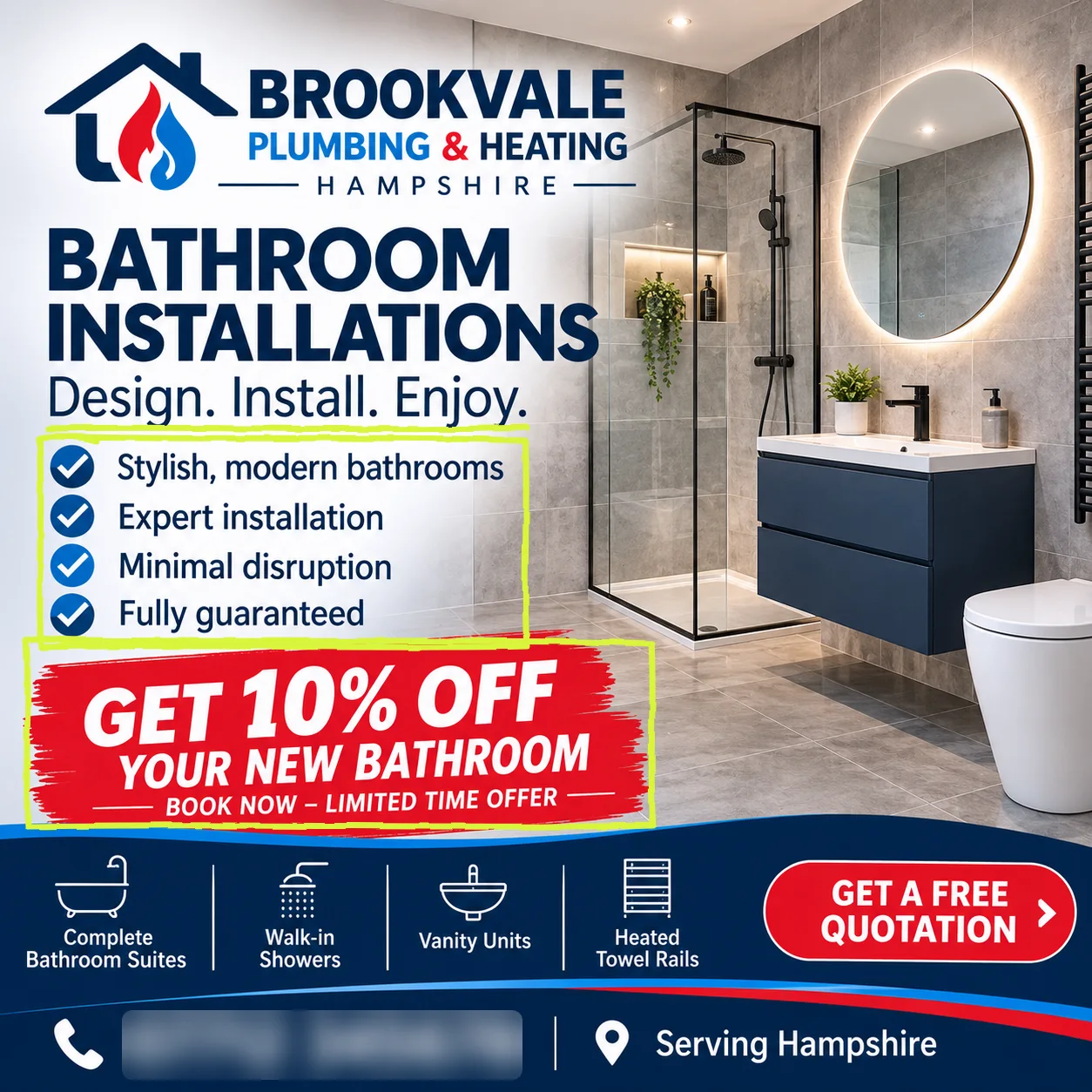
Then there's the slogan. "Design. Install. Enjoy." The emergency advert says "Local. Reliable. Here when you need us." The homepage says "Reliable. Professional. Always Here to Help." Read one out loud to a customer. Nobody talks like that.
A model, not your engineer
The plumber in the emergency advert is handsome, spotless and doesn't exist. Neither does the showroom bathroom in the other advert, which is lovely and not one you fitted. This is the one people notice fastest: 67% of UK consumers told Optimizely that AI-generated images of people in marketing are "creepy".
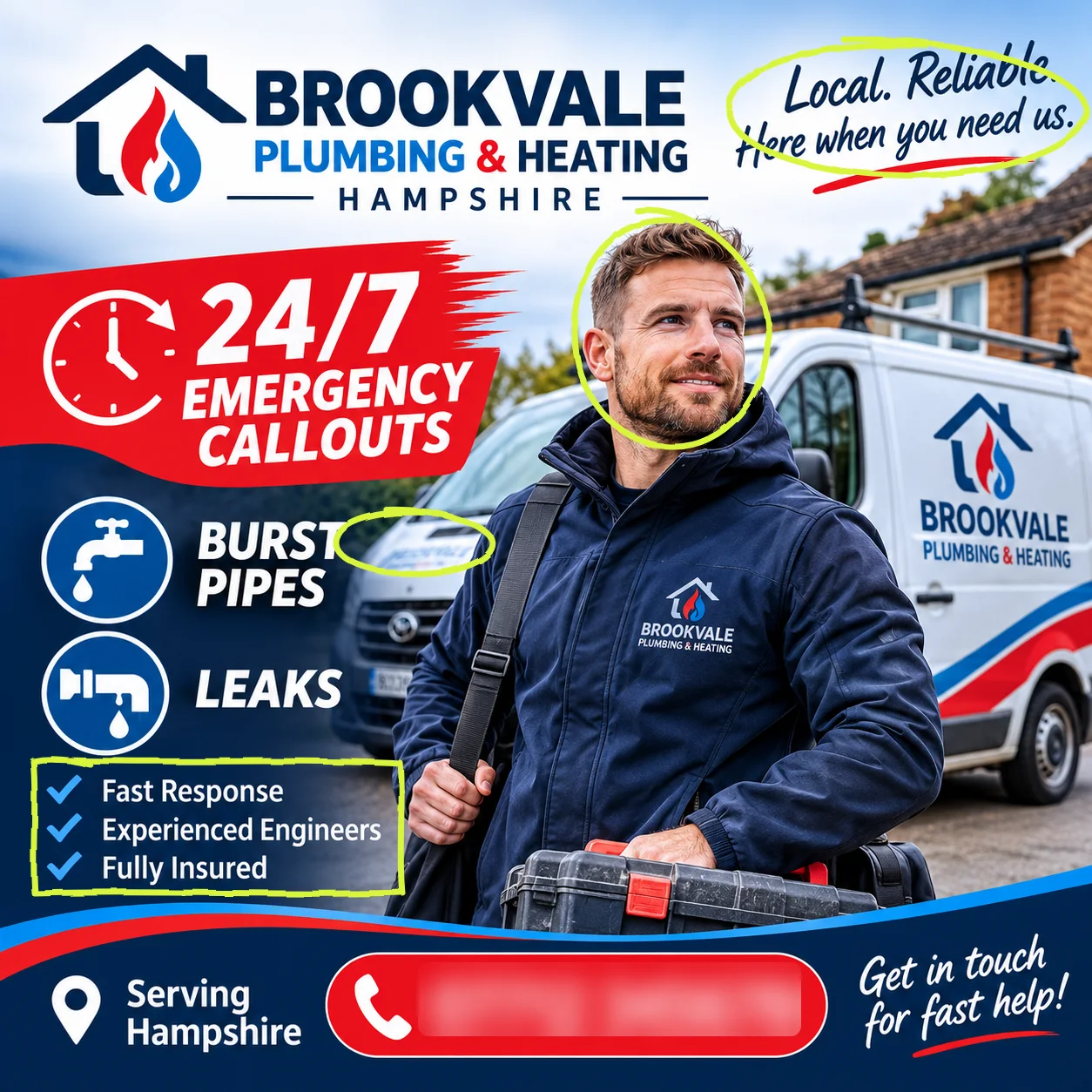
Notice what's missing, too. "Serving Hampshire." Not a town, not a street, not one named job. Real local businesses name their villages and show the work.
What about a ChatGPT website?
Ask ChatGPT to design a homepage and you get a picture of a website. You can't click it, Google can't read it, and the reviews are invented: "Sarah M, Winchester", "James T, Petersfield" and "Helen R, Alton", three five-star reviews from three people who don't exist, under a "5 Star Rated" badge.
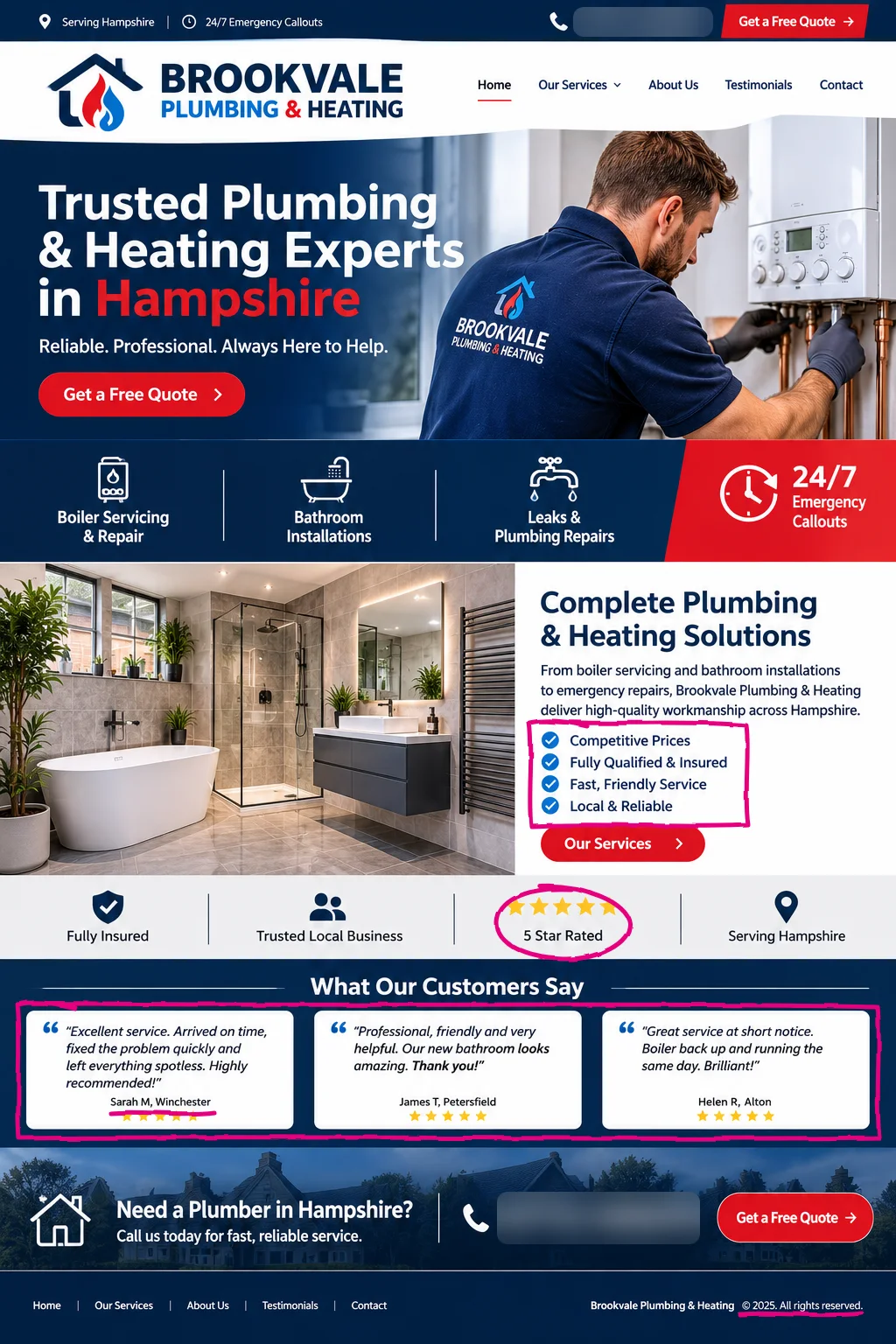
If someone then builds that exactly as drawn, those reviews go live. Fake reviews have been banned in the UK since 6 April 2025. That's not a risk worth a template.
Look at the edges
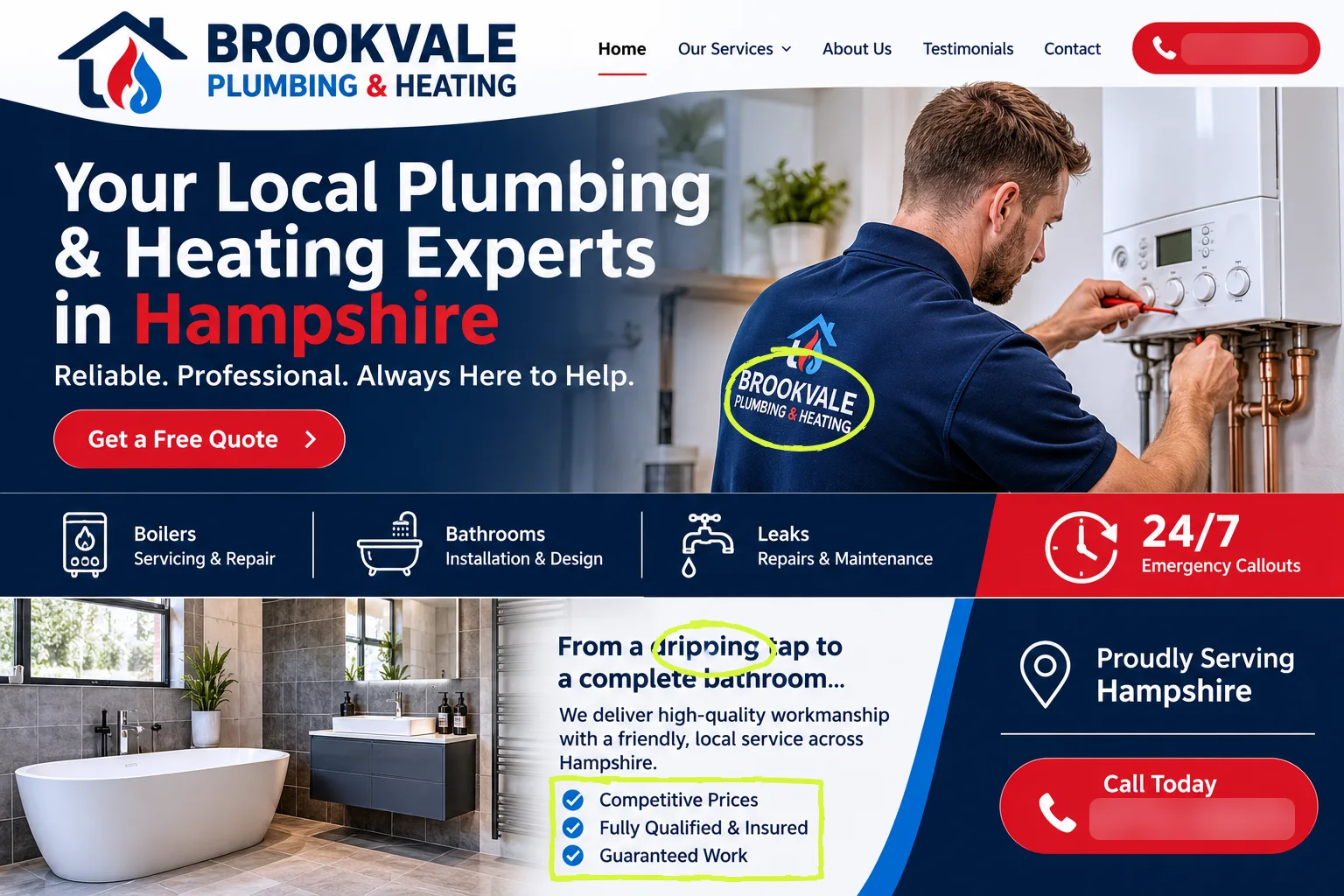
AI draws the middle of a picture well and the edges badly. On the homepage hero, the word "dripping" has gone wobbly. In the emergency advert, the van behind the plumber has smeared, half-formed lettering. The logo on his shirt is perfect, because that's where you're meant to look. Zoom in on the background and the giveaways are usually there.
The ten-second test
Two questions I ask of every design, my own included:
- Is this the first thing a prompt would produce?
- Swap in another business name. Does it still work? If a plumber's advert works for a dentist, it isn't about the plumber.
And a quick check you can run on your own site or adverts:
| What to look for | What it means | What to do instead |
|---|---|---|
| A phone number, offer or promise you didn't write | Nobody checked it | Read every line before it goes out |
| Three-word slogans | Words nobody would say | Say what you do, the way you'd say it on the phone |
| A model instead of you | People feel it's fake | A real photo of you, your van or your team |
| Showroom photos | Not your work | Photos of jobs you've actually done |
| "Serving Hampshire" | Could be anyone | Name your towns and villages |
| Reviews with first names only | Could be invented | Link to your real Google reviews |
| Warped text in the background | Generated, not photographed | Zoom in before you post |
What the human part looks like
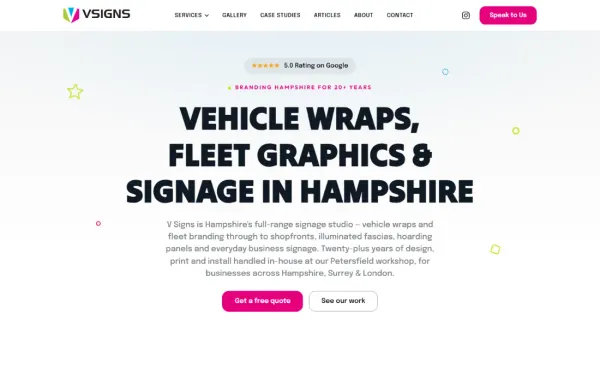
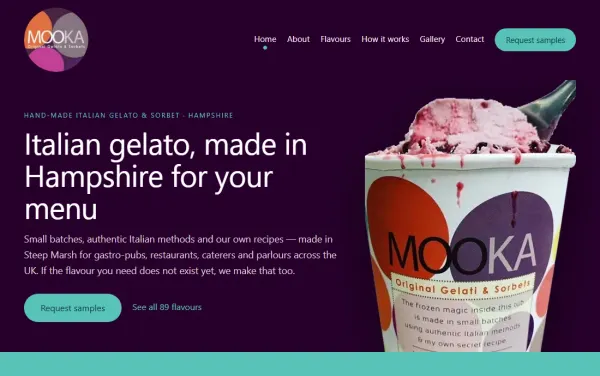
When I built the site for V Signs, a sign and wrap company near Petersfield, I noticed most of their customers don't know the difference between a fascia and a hoarding panel. So the site has a Sign Finder: plain-English questions in, a recommended service out, and the whole answer trail lands with V Signs in the enquiry. For Mooka, the job was letting a chef find a flavour in seconds, so the site is a flavour library, not a brochure.
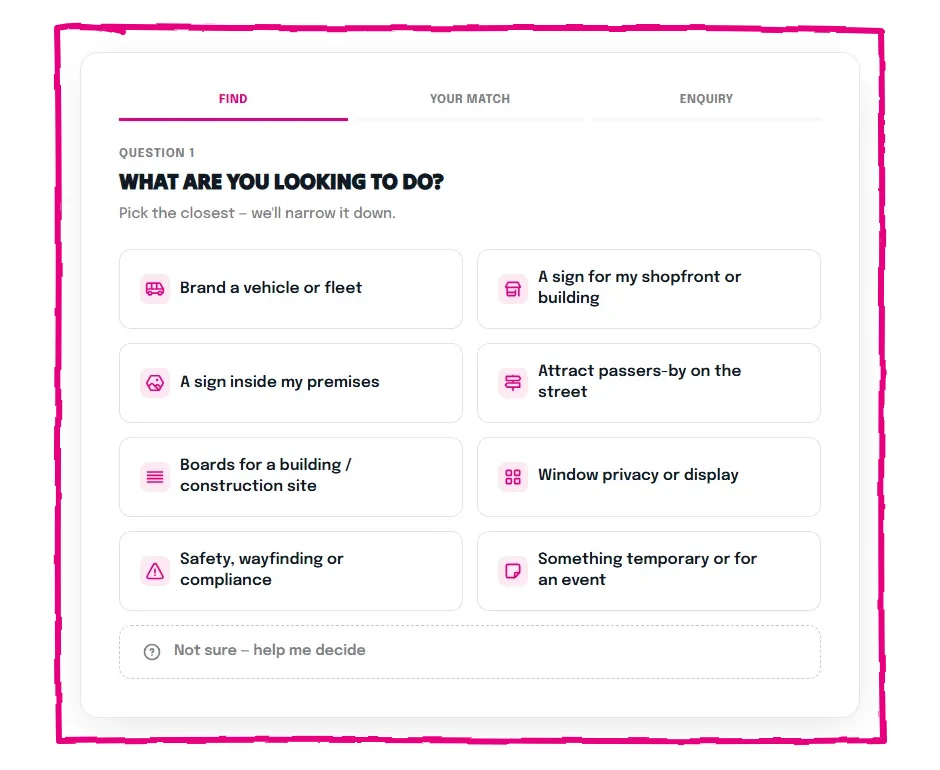
I used AI along the way on both. But no prompt would have come up with either idea, because both came from knowing the business. That's the part your customers are actually looking for. I wrote more about this in why I don't use templates.
The exact prompts I used
Each one went into a new ChatGPT chat, with no follow-up and no edits:
- "Make me a Facebook advert for my plumbing business in Hampshire called Brookvale Plumbing & Heating. It's for boiler servicing before winter. Make it eye-catching."
- "Make an Instagram ad for Brookvale Plumbing & Heating, Hampshire. 24/7 emergency callouts, burst pipes, leaks. Include a plumber and a van."
- "Create a social media ad for a bathroom installation company called Brookvale Plumbing & Heating. Modern, professional, with a special offer."
- "Make me a website for my plumbing and heating business in Hampshire. It's called Brookvale Plumbing & Heating. We do boilers, bathrooms, leaks and emergency callouts. Make it look modern and professional."
- "Design a homepage for my plumbing website, Brookvale Plumbing & Heating in Hampshire. Show me what it should look like."
Brookvale isn't a real business. Everything else in the images is exactly as ChatGPT made it.
If you're not sure whether your site or adverts look prompted, send me the link and I'll tell you honestly what I'd change. Or see what's in each website pack.
Questions people ask
Can people really tell if an advert was made with AI?
Many think they can. In a 2026 survey, 57% of UK consumers said they can usually tell when content is AI-generated. They aren't always right, but they react to the look either way, so looking prompted costs you even when a person made it.
Is it OK to use ChatGPT for my business adverts?
Yes, as a tool. Use it for ideas, first drafts and wording. Then check every line, swap in your own photos, and make sure the phone number, offers and promises are ones you actually made.
Will Google penalise a website made with AI?
Google doesn't rank a page down just because AI helped write it. It looks at whether the page is useful and accurate, and it says AI content should be fact-checked by a person before it goes out. The bigger risk is a site with nothing on it that only you could say.
How do I make my website look less generic?
Real photos of your jobs, your van and your face. Reviews that link to Google. The towns and villages you actually cover. And one thing on the page that only your business would think of.

Born in Petersfield in 1986, now based in Poland. Twenty-five years running real businesses, and now I build websites, local SEO and socials for Hampshire small businesses. Every price I quote is on one page.
Want a straight answer for your business?
Tell me what you do and where. I'll come back within one working day with a fixed price, not a range.